
OneRoster Resources Service
This is the OneRoster 1.2 Resources Service specification. It defines the exchange of the identification of the resources that are linked to classes, courses and users. This service is made available as a REST/JSON based binding to support resources allocation to classes and courses data exchange.
Abstract
The IMS OneRoster (OR) standard addresses the exchange of student data (primarily about people, courses, enrollments and grades) between different educational systems for the specific needs of K-12. The primary use-case is the exchange of data between a Student Information System (SIS) and Learning Management System (LMS). In OR 1.2, the service has been split into three core services:
- OneRoster Rostering Service 1EdTech OneRoster 1.2 Rostering Service Model Final Release 1.0 - to enable the exchange of information about the rostering of people in classes;
- OneRoster Gradebook Service 1EdTech OneRoster 1.2 Gradebook Services Final Release 1.0 - to enable the exchange of information about results which may be aligned as lineItems and categories which are collections of lineItems;
- OneRoster Resources Service - described in this document.
This OR 1.2 Resources Service provides the ability to manage the allocation of resources to classes, courses and users. It does NOT enable access to the resources themselves. A OneRoster resource is a description of a resource with sufficient information such that the resource itself could be obtained. In this document the data exchange is described in an implementation-independent format i.e. using a profile of the Unified Modeling Language (UML). The service description includes the definition of the data formats that are exchanged using a set of service operations.
Introduction
This Section is NOT NORMATIVE.
Scope and Context
This document is the OneRoster 1.2 Resources Service Model and as such it is used as the basis for the development of the following documents:
- OneRoster 1.2 Resources REST/JSON Binding IMS OneRoster 1.2 Resources REST/JSON Binding Final Release - the description of the REST/JSON binding, including the OpenAPI description, of the Information Model;
- OneRoster 1.2 Implementation Guide 1EdTech OneRoster 1.2 Implementation Guide Final Release 1.0 - the recommended best practices for implementing the set of OneRoster services;
- OneRoster 1.2 Conformance and Certification 1EdTech OneRoster 1.2 Conformance and Certification Final Release 1.0 - the conformance guidelines for achieving OneRoster Resources certification.
This information model defines the OneRoster Resources Abstract Application Programming Interface (a-API). This service model is described using the Unified Modeling Language (UML) based upon the 1EdTech Model Driven Specification approach and the associated modelling toolkit 1EdTech Binding Auto-generation Toolkit (I-BAT). This means that this specification is based upon the concepts of:
- Interoperability - the OneRoster Resources service focuses on the exchange of learning standards and competencies definitions. There are no definitions in the specification on how the data is managed within the end-systems;
- Service-oriented - the OneRoster Resources service specification defines the exchange of information in terms of the services being supplied by the collaboration of the systems.
Conventions
As well as sections marked as non-normative, all authoring guidelines, diagrams, examples, and notes in this specification are non-normative. Everything else in this specification is normative.
The key words MAY, MUST, MUST NOT, NOT RECOMMENDED, NOT REQUIRED, OPTIONAL, RECOMMENDED, REQUIRED, SHALL, SHALL NOT, SHOULD, and SHOULD NOT in this document $are to be interpreted as described in Key words for use in RFCs to Indicate Requirement Levels.
An implementation of this specification that fails to implement a MUST/REQUIRED/SHALL requirement or fails to abide by a MUST NOT/SHALL NOT prohibition is considered nonconformant. SHOULD/SHOULD NOT/RECOMMENDED statements constitute a best practice. Ignoring a best practice does not violate conformance but a decision to disregard such guidance should be carefully considered. MAY/OPTIONAL statements indicate that implementers are entirely free to choose whether or not to implement the option.
The Conformance and Certification Guide for this specification may introduce greater normative constraints than those defined here for specific service or implementation categories.
Changes in the Resources Service 1.2
The only changes made in this new version are:
- The Resource Management parts of the OneRoster specification have been separated out into their own Service Model and REST/JSON Binding documents;
- The endpoint 'getResourcesForUser()' has been added;
- The endpoints have been annotated as '/ims/oneroster/resources/v1p2' to replace the '/ims/oneroster/v1p1';
- The 'RoleEnum' vocabulary has been made extensible to enable easier profiling for internationalisation;
- Use of OAuth 1.0a message signing has been removed. The use of OAuth 2.0 Bearer Tokens (Client Credentials Grant) is required instead. The security architecture has been aligned to the 1EdTech Security Framework 1EdTech Security Framework 1.1 Final Release.
Nomenclature
- API
- Application Programming Interface
- GUID
- Globally Unique Identifier
- HTTP
- Hypertext Transfer Protocol
- I-BAT
- IMS Binding Autogeneration Toolkit
- IETF
- Internet Engineering Task Force
- JSON
- Java Script Object Notation
- LIS
- Learning Information Services
- NCES
- National Centre for Education Statistics
- OAS
- OpenAPI Specification
- PII
- Personally Identifiable Information
- REST
- Representational State Transfer
- RFC
- Request for Comments
- TLS
- Transport Layer Security
- UML
- Unified Modeling Language
- URI
- Uniform Resource Identifier
- URL
- Uniform Resource Locator
- UTC
- Coordinated Universal Time
- YAML
- Yet Another Markup Language
Use-cases
This Section is NOT NORMATIVE.
The set of use-cases addressed by the OR Resources Service are summarised in Table 2.1.
| ID | Use-case Description |
|---|---|
| 1 | To enable a system to obtain information about the set of resources that should be used when taking a specific class. To provide the set of identifiers that are allocated to a class. |
| 2 | To enable a system to obtain information about the set of resources that should be used when taking a specific course. To provide the set of identifiers that are allocated to a course. |
| 3 | To enable a system to obtain information about the set of resources that should be made available to a specific user. To provide the set of identifiers that are allocated to a user. |
| [Table 2.1 - The list of use-cases enabled by this OneRoster service.] |
Service Architecture and Specification Model
This Section is NOT NORMATIVE.
An Abstract Representation
It is important to remember that this document contains a description of the underlying service model in terms of the abstract Application Programming Interface (API). The manner in which this abstract representation is visualized is not intended to dictate the implementation form of the Service. The breakdown of the service into its interface classes is a convenient way to document the set of behaviors. The objective for producing these interfaces is to identify and define the messages that are exchanged between the end-systems to realize the system behaviors required of the service.
The internal organization of an implementation of the full abstract API is beyond the scope of this specification. The only constraint is that the external behavior of the abstract API complies with this specification. This means that a .NET, J2EE, etc. physical implementation of this abstract API does not have to represent the functionality using the same breakdown of operations/methods. This physical implementation is not subject to the conformance specification.
It is important to note that the UML representation of the interfaces is used to help develop and document the Service Model and various Bindings. It is not a requirement for a system to implement this interface as defined i.e. to use the same parameters, etc. Conformance against this specification will be confirmed by inspecting the appropriate binding of the information model and ensuring that the relevant information is present and that different sequences of activity result in the predicted and mandated behavior. It is essential that the behaviors described by each of the operations are fully supported and that the behaviors described by different sequences are also maintained.
Service Providers and Service Consumers
The basic architectural model for the OR Resources Service specification is shown in Figure 3.1. In this architecture the scope of the IMS OR Resources Service specification is shown as the dotted line. The scope of the interoperability is the data and behavioral models of the objects being exchanged.
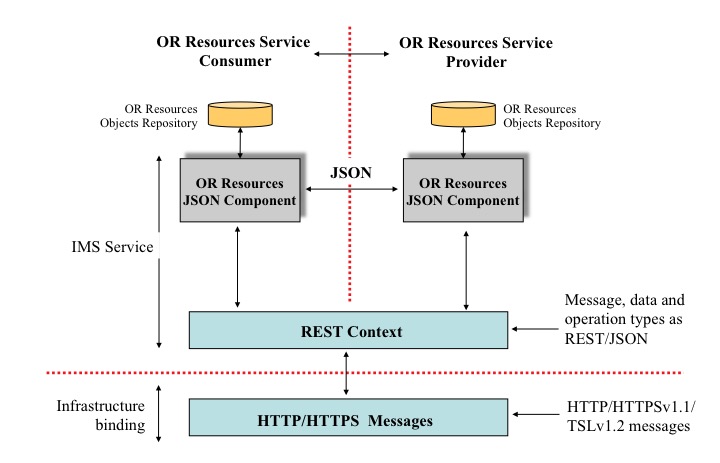
Figure 3.1 - The OR Resources service architecture.
It is important to remember that the structure of the exchanged information has NO bearing on how the same information is contained within the 'consumer' and 'provider' OR Resources systems (the OR Resources repositories in the two end-systems). It is simply a representation of the data used to facilitate exchange between the end-systems. The only constraint on the end-system repositories is that they provide data persistence consistent with the required behavior.
Service Objects
The set of service objects that are exchanged between end-systems are:
- Resource - the container for the complete set of data for a Resource.
The set of service collection objects that are exchanged between end-systems are:
- ResourceSet - a set of Resources.
A class and/or a course and/or a user has a set of associated resources. A class, course and user MUST reference the set of associated resources. A UML class representation of this set of relationships is shown in Figure 3.2.
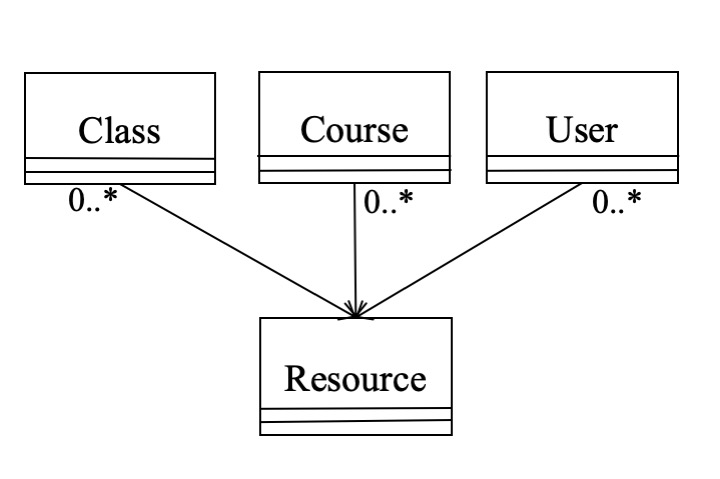
Figure 3.2 - The logical relationships between resources and classes, courses and users.
In general a resource will be associated with more than one class and/or course and/or user.
Synchronous and Asynchronous Services
The OR Resources Service is a synchronous service i.e. the consumer is blocked until the response from the provider is received. This means that a consumer can only have one outstanding request with a service provider. The corresponding sequence of actions is shown in Figure 3.3.
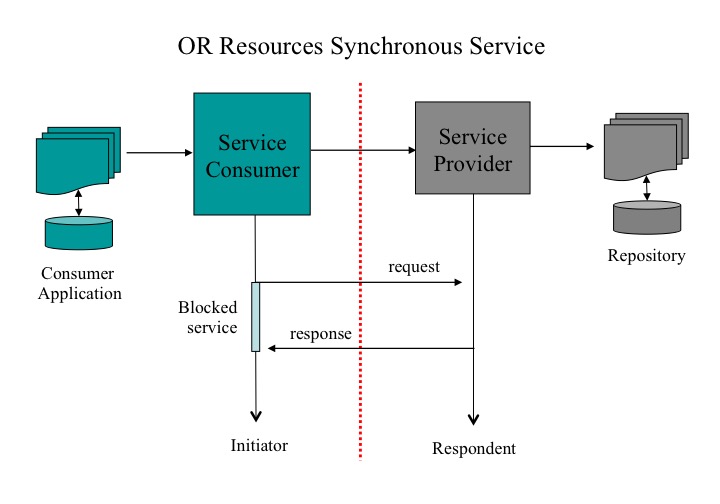
Figure 3.3 - The action sequence for the OR Resources synchronous service.
Figure 3.3 shows the action sequence from the prespective of the consumer but it must be noted that a Service Provider will be expected to support concurrent requests from many consumers.
OneRoster Rostering and Resources Choreography
Apart from the 'getAllResources()' call, the other calls require provision of a 'sourcedId' to identify either the resource itself or the associated class or course. Therefore, support for the Resources endpoints should also require support for the OR Rostering endpoints. The Class and Course classes contain the set of sourcedIds for the resources associated with the class or course retrospectively and so this is the entry point for obtaining the associated resource allocations.
The Behavior Model
The definition of the operations of the service. This focuses on the description of the behaviors supported by the service. The behaviors are grouped as interfaces;
| Interface | Description |
|---|---|
| CoursesManagement | This enables the management of information about resources i.e. the allocation of resources to courses. |
| ClassesManagement | This enables the management of information about resources i.e. the allocation of resources to classes. |
| ResourcesManagement | This enables the management of information about resources. |
| UsersManagement | This enables the management of information about resources i.e. the allocation of resources to courses. |
CoursesManagement Interface
This enables the management of information about resources i.e. the allocation of resources to courses.
| Operation | Description |
|---|---|
| getResourcesForCourse | To read, get, the collection of resources associated to the specified course. This is the OneRoster description of the resources and not the actual resources. If the specified class cannot be identified within the service provider then a status code of 'unknownobject' must be reported. |
"getResourcesForCourse" Operation
To read, get, the collection of resources associated to the specified course. This is the OneRoster description of the resources and not the actual resources. If the specified class cannot be identified within the service provider then a status code of 'unknownobject' must be reported.
Parameters
No parameters defined.
Return Parameters
| Type | Description | Multiplicity | Confidentiality |
|---|---|---|---|
| ResourceSet | No Description | [1] | N/A |
ClassesManagement Interface
This enables the management of information about resources i.e. the allocation of resources to classes.
| Operation | Description |
|---|---|
| getResourcesForClass | To read, get, the collection of resources associated to the specified class. This is the OneRoster description of the resources and not the actual resources. If the specified class cannot be identified within the service provider then a status code of 'unknownobject' must be reported. |
"getResourcesForClass" Operation
To read, get, the collection of resources associated to the specified class. This is the OneRoster description of the resources and not the actual resources. If the specified class cannot be identified within the service provider then a status code of 'unknownobject' must be reported.
Parameters
No parameters defined.
Return Parameters
| Type | Description | Multiplicity | Confidentiality |
|---|---|---|---|
| ResourceSet | No Description | [1] | N/A |
ResourcesManagement Interface
This enables the management of information about resources.
| Operation | Description |
|---|---|
| getAllResources | To read, get, a collection of resources i.e. all resources. This is the OneRoster description of the resources and not the actual resources. |
| getResource | To read, get, a specific OneRoster resource description. If the specified class cannot be identified within the service provider then a status code of 'unknownobject' must be reported. |
"getAllResources" Operation
To read, get, a collection of resources i.e. all resources. This is the OneRoster description of the resources and not the actual resources.
Parameters
No parameters defined.
Return Parameters
| Type | Description | Multiplicity | Confidentiality |
|---|---|---|---|
| ResourceSet | No Description | [1] | N/A |
"getResource" Operation
To read, get, a specific OneRoster resource description. If the specified class cannot be identified within the service provider then a status code of 'unknownobject' must be reported.
Parameters
No parameters defined.
Return Parameters
| Type | Description | Multiplicity | Confidentiality |
|---|---|---|---|
| SingleResource | No Description | [1] | N/A |
UsersManagement Interface
This enables the management of information about resources i.e. the allocation of resources to courses.
| Operation | Description |
|---|---|
| getResourcesForUser | To read, get, the collection of resources available to the specified user. This is the OneRoster description of the resources and not the actual resources. If the specified user cannot be identified within the service provider then a status code of 'unknownobject' must be reported. |
"getResourcesForUser" Operation
To read, get, the collection of resources available to the specified user. This is the OneRoster description of the resources and not the actual resources. If the specified user cannot be identified within the service provider then a status code of 'unknownobject' must be reported.
Parameters
No parameters defined.
Return Parameters
| Type | Description | Multiplicity | Confidentiality |
|---|---|---|---|
| ResourceSet | No Description | [1] | N/A |
The Data Model
Data Class Descriptions
Base Class
This is the base class which all of the first class objects in the Resource service inherit. It defines the instance's unique, interoperability identifier, the status of the instance data and the date the data was last changed. It all defines how the data model can be extended using the 'metadata' structure.
| Attribute | Type | Description | Multiplicity | Privacy |
|---|---|---|---|---|
| sourcedId | GUID | All Objects MUST be identified by a Source Identifier. This is a GUID i.e. a unique system interoperability identifier for an object. This is the GUID that SYSTEMS will refer to when making API calls, or when needing to identify an object. It is RECOMMENDED that systems are able to map whichever local identifiers (e.g. database key fields) they use to the corresponding SourcedId. The sourcedId of an object is considered an addressable property of an entity and as such will not be treated as Personally Identifiable Information (PII) by certified products. Therefore, as a part of certification, vendors will be required to declare that they will notify customers via documentation or other formal and documented agreement that sourcedIds should never contain PII in general, but particularly users. This means that if a customer includes a student name in an enrollment.sourcedId, it will not fall to any certified product to protect the enrollment.sourcedId as PII, or even the userSourcedId field in the enrollment record. | [1] | N/A |
| status | BaseStatusEnum | All objects MUST BE either 'active' or 'tobedeleted'. Something which is flagged 'tobedeleted' is to be considered safe to delete. Systems can delete records that are flagged as such if they wish, but they are not under any compulsion to do so. NOTE: In v1.1 the enumeration value of 'inactive' was removed and so for backwards compatibility all such marked objects should be interpreted as 'tobedeleted'. | [1] | N/A |
| dateLastModified | DateTime | All objects MUST be annotated with the dateTime upon which they were last modified. This enables requesters to query for just the latest objects. DateTimes MUST be expressed in W3C profile of [ISO 8601] and MUST contain the UTC timezone. | [1] | N/A |
| metadata | Metadata | All objects CAN be extended using the Metadata class. This specification is silent on what implementers may consider to be appropriate extensions. | [0..1] | N/A |
Metadata Class
This is the container for the data model extensions that may be assigned to the associated class of objects.
This class can be extended with additional properties.
Resource Class
A resource is a description of learning content that is related to a course and/or a class and/or a user. This identifies a resource that is used by a teacher, learner, etc. as part of the learning experience. A resource MUST be associated to a course and/or a class.
| Attribute | Type | Description | Multiplicity | Privacy |
|---|---|---|---|---|
| title | NormalizedString | A human readable title/label for the resource. | [0..1] | N/A |
| roles | RoleEnumExt | The set of roles, types of users, who are expected to make use of the resource. | [0..*] | N/A |
| importance | ImportanceEnum | This is an indicator of the significance of the resource i.e. primary or secondary. | [0..1] | N/A |
| vendorResourceId | Identifier | This is a unique identifier for the resource allocated by the vendor. | [1] | N/A |
| vendorId | Identifier | Identifier for the vendor who created the resource. This will be assigned by 1EdTech as part of Conformance Certification. | [0..1] | N/A |
| applicationId | Identifier | Identifier for the application associated with the resource. The nature, and how this identifier is assigned is not defined by this specification. | [0..1] | N/A |
| sourcedId | GUID | All Objects MUST be identified by a Source Identifier. This is a GUID i.e. a unique system interoperability identifier for an object. This is the GUID that SYSTEMS will refer to when making API calls, or when needing to identify an object. It is RECOMMENDED that systems are able to map whichever local identifiers (e.g. database key fields) they use to the corresponding SourcedId. The sourcedId of an object is considered an addressable property of an entity and as such will not be treated as Personally Identifiable Information (PII) by certified products. Therefore, as a part of certification, vendors will be required to declare that they will notify customers via documentation or other formal and documented agreement that sourcedIds should never contain PII in general, but particularly users. This means that if a customer includes a student name in an enrollment.sourcedId, it will not fall to any certified product to protect the enrollment.sourcedId as PII, or even the userSourcedId field in the enrollment record. | [1] | N/A |
| status | BaseStatusEnum | All objects MUST BE either 'active' or 'tobedeleted'. Something which is flagged 'tobedeleted' is to be considered safe to delete. Systems can delete records that are flagged as such if they wish, but they are not under any compulsion to do so. NOTE: In v1.1 the enumeration value of 'inactive' was removed and so for backwards compatibility all such marked objects should be interpreted as 'tobedeleted'. | [1] | N/A |
| dateLastModified | DateTime | All objects MUST be annotated with the dateTime upon which they were last modified. This enables requesters to query for just the latest objects. DateTimes MUST be expressed in W3C profile of [ISO 8601] and MUST contain the UTC timezone. | [1] | N/A |
| metadata | Metadata | All objects CAN be extended using the Metadata class. This specification is silent on what implementers may consider to be appropriate extensions. | [0..1] | N/A |
ResourceSet Class
The container for a collection of resource records. The order is not significant. This may be empty. The service provider may not have any resources or cannot identfiy any resources that fit the specified filter constraints.
| Attribute | Type | Description | Multiplicity | Privacy |
|---|---|---|---|---|
| resources | Resource | The set of contained resource identfiers. | [0..*] | N/A |
SingleResource Class
The container for a single resource. This may be empty i.e. the resource has no properties that obey any of the specified selection criteria.
| Attribute | Type | Description | Multiplicity | Privacy |
|---|---|---|---|---|
| resource | Resource | The label for the contained resource. | [1] | N/A |
imsx_CodeMinor Class
This is the container for the set of code minor status codes reported in the responses from the Service Provider.
| Attribute | Type | Description | Multiplicity | Privacy |
|---|---|---|---|---|
| imsx_codeMinorField | imsx_CodeMinorField | Each reported code minor status code. | [1..*] | N/A |
imsx_CodeMinorField Class
This is the container for a single code minor status code.
| Attribute | Type | Description | Multiplicity | Privacy |
|---|---|---|---|---|
| imsx_codeMinorFieldName | NormalizedString | This should contain the identity of the system that has produced the code minor status code report. In most cases this will be the target service provider denoted as 'TargetEndSystem'. | [1] | N/A |
| imsx_codeMinorFieldValue | imsx_CodeMinorValueEnum | The code minor status code (this is a value from the corresponding enumerated vocabulary). | [1] | N/A |
imsx_StatusInfo Class
This is the container for the status code and associated information returned within the HTTP messages received from the Service Provider. For the OneRoster Resources service this object will only be returned to provide information about a failed request i.e. it will NOT be in the payload for a successful request. See Appendix B for further information on the interpretation of the information contained within this class.
| Attribute | Type | Description | Multiplicity | Privacy |
|---|---|---|---|---|
| imsx_codeMajor | imsx_CodeMajorEnum | The code major value (from the corresponding enumerated vocabulary). See Appendix B for further information on the interpretation of this set of codes. The permitted vocabulary for the values for the CodeMajor field. | [1] | N/A |
| imsx_severity | imsx_SeverityEnum | The severity value (from the corresponding enumerated vocabulary). See Appendix B for further information on the interpretation of this set of codes. | [1] | N/A |
| imsx_description | String | A human readable description supplied by the entity creating the status code information. | [0..1] | N/A |
| imsx_CodeMinor | imsx_CodeMinor | The set of reported code minor status codes. See Appendix B for further information on the interpretation of this set of codes. | [0..1] | N/A |
Derived Class Descriptions
GUID Class
The data-type for establishing a Globally Unique Identifier (GUID). This is the data-type used for a 'sourcedId'. There is no predefined structure for the GUID.
Identifier Class
The data-type for a unique identifier (but not a GUID). The format/structure of such an identifier is undefined.
RoleExtString Class
The data-type that enables the 'RoleEnum' vocabulary to be extended.
| Attribute | Type | Description | Multiplicity | Privacy |
|---|---|---|---|---|
| pattern | String | The regular expression to constrain the structure of the string that MUST be used when creating a new, proprietary, vocabulary term. The term must start with the substring 'ext:'. | [1] | N/A |
Union Class Descriptions
RoleEnumExt Class
The data-type for the 'role' characteristic used to identify the type of user for whom the resources are targetted. This is an extensible enumerated vocabulary. Extending the vocabulary makes use of a naming convention.
| Attribute | Type | Description | Multiplicity | Privacy |
|---|---|---|---|---|
| pattern | String | The regular expression to constrain the structure of the string that MUST be used when creating a new, proprietary, vocabulary term. The term must start with the substring 'ext:'. | [1] | N/A |
| administrator | String | Administrator in the organization (e.g. School). | [1] | N/A |
| aide | String | Someone who provides appropriate aide to the user but NOT also one of the other roles. | [1] | N/A |
| guardian | String | Guardian of the user and NOT the Mother or Father. May also be a Relative. | [1] | N/A |
| parent | String | Mother or father of the user. | [1] | N/A |
| proctor | String | Exam proctor. May be used for enrollment. | [1] | N/A |
| relative | String | A relative of the user and NOT the Mother or Father. May also be the Guardian. | [1] | N/A |
| student | String | A student at an organization (e.g. School). | [1] | N/A |
| teacher | String | A Teacher at an organization (e.g. School). | [1] | N/A |
Enumerated Vocabulary Descriptions
BaseStatusEnum Enumeration
The permitted vocabulary for the status value of a record.
| Attribute | Type | Description | Multiplicity | Privacy |
|---|---|---|---|---|
| active | String | An active record. | [1] | N/A |
| tobedeleted | String | Denotes that it is safe to delete the record. | [1] | N/A |
ImportanceEnum Enumeration
The permitted vocabulary for the 'importance' value of a resource.
| Attribute | Type | Description | Multiplicity | Privacy |
|---|---|---|---|---|
| primary | String | A resource of primary usage. | [1] | N/A |
| secondary | String | A resource of secondary usage/significance. | [1] | N/A |
RoleEnum Enumeration
The permitted vocabulary for the 'role' value for the targeted user of a resource.
| Attribute | Type | Description | Multiplicity | Privacy |
|---|---|---|---|---|
| administrator | String | Administrator in the organization (e.g. School). | [1] | N/A |
| aide | String | Someone who provides appropriate aide to the user but NOT also one of the other roles. | [1] | N/A |
| guardian | String | Guardian of the user and NOT the Mother or Father. May also be a Relative. | [1] | N/A |
| parent | String | Mother or father of the user. | [1] | N/A |
| proctor | String | Exam proctor. May be used for enrollment. | [1] | N/A |
| relative | String | A relative of the user and NOT the Mother or Father. May also be the Guardian. | [1] | N/A |
| student | String | A student at an organization (e.g. School). | [1] | N/A |
| teacher | String | A Teacher at an organization (e.g. School). | [1] | N/A |
RoleEnumExt Enumeration
The data-type for the 'role' characteristic used to identify the type of user for whom the resources are targetted. This is an extensible enumerated vocabulary. Extending the vocabulary makes use of a naming convention.
| Attribute | Type | Description | Multiplicity | Privacy |
|---|---|---|---|---|
| pattern | String | The regular expression to constrain the structure of the string that MUST be used when creating a new, proprietary, vocabulary term. The term must start with the substring 'ext:'. | [1] | N/A |
| administrator | String | Administrator in the organization (e.g. School). | [1] | N/A |
| aide | String | Someone who provides appropriate aide to the user but NOT also one of the other roles. | [1] | N/A |
| guardian | String | Guardian of the user and NOT the Mother or Father. May also be a Relative. | [1] | N/A |
| parent | String | Mother or father of the user. | [1] | N/A |
| proctor | String | Exam proctor. May be used for enrollment. | [1] | N/A |
| relative | String | A relative of the user and NOT the Mother or Father. May also be the Guardian. | [1] | N/A |
| student | String | A student at an organization (e.g. School). | [1] | N/A |
| teacher | String | A Teacher at an organization (e.g. School). | [1] | N/A |
imsx_CodeMajorEnum Enumeration
The permitted vocabulary for the values for the CodeMajor field.
| Attribute | Type | Description | Multiplicity | Privacy |
|---|---|---|---|---|
| success | String | Denotes that the request has been successfully completed. If the associated 'severity' value is 'warning' then the request has been partially successful i.e. best effort by the service provider. Other parts of the status information may provide more insight into a partial success response. | [1] | N/A |
| processing | String | Denotes that the request is being processed at the destination or there has been a local transmission failure. This value is used in asynchronous services. | [1] | N/A |
| failure | String | Denotes that the transaction request has failed. The detailed reason will be reported in the accompanying 'codeMinor' fields. | [1] | N/A |
| unsupported | String | Denotes that the service provider does not support the requested operation. This is the required default response for an unsupported operation by an implementation. | [1] | N/A |
imsx_CodeMinorValueEnum Enumeration
The permitted vocabulary for the values for the CodeMinorValue field.
| Attribute | Type | Description | Multiplicity | Privacy |
|---|---|---|---|---|
| fullsuccess | String | The request has been fully and successfully implemented by the Service Provider. For a REST binding this will have an HTTP code of '200' for a successful 'GET' request; '201' for a successful 'PUT' request; '204' for a successful 'DELETE' request. | [1] | N/A |
| invalid_filter_field | String | An invalid filter field was supplied and so the filtering was not possible. No data has been reurned. This would be accompanied by the 'codeMajor/severity' values of 'failure/error' and for a REST binding a HTTP code of '400'. | [1] | N/A |
| invalid_selection_field | String | An invalid selection field field was supplied and data filtering on the selection criteria was not possible. This would be accompanied by the 'codeMajor/severity' values of 'failure/error' and for a REST binding a HTTP code of '400'. | [1] | N/A |
| forbidden | String | This is used to indicate that the server can be reached and process the request but refuses to take any further action. This would be accompanied by the 'codeMajor/severity' values of 'failure/error' and for a REST binding a HTTP code of '403'. | [1] | N/A |
| unauthorisedrequest | String | The request was not correctly authorised. This would be accompanied by the 'codeMajor/severity' values of 'failure/error' and for a REST binding a HTTP code of '401'. | [1] | N/A |
| internal_server_error | String | This should be used only if there is catastrophic error and there is not a more appropriate code. This would be accompanied by the 'codeMajor/severity' values of 'failure/error' and for a REST binding a HTTP code of '500'. | [1] | N/A |
| server_busy | String | The server is receiving too many requests. Retry at a later time. This would be accompanied by the 'codeMajor/severity' values of 'failure/error' and for a REST binding a HTTP code of '429'. | [1] | N/A |
| unknownobject | String | The supplied identifier is unknown in the Service Provider and so the object could not be changed. This would be accompanied by the 'codeMajor/severity' values of 'failure/error' and for a REST binding a HTTP code of '404'. | [1] | N/A |
| invaliddata | String | This error condition may occur if a JSON request/response body contains well-formed (i.e. syntactically correct), but semantically erroneous, JSON instructions. This would be accompanied by the 'codeMajor/severity' values of 'failure/error' and a HTTP code of '422'. | [1] | N/A |
| invalid_sort_field | String | An invalid sort field field was supplied and sorting on the given value was not possible. This would be accompanied by the 'codeMajor/severity' values of 'failure/error' and for a REST binding a HTTP code of '400'. | [1] | N/A |
| unsupported | String | Denotes that the service provider does not support the requested operation. This is the required default response for an unsupported operation by an implementation. This would be accompanied by the 'codeMajor/severity' values of 'unsupported/error' and for a REST binding a HTTP code of '500'. | [1] | N/A |
imsx_SeverityEnum Enumeration
The permitted vocabulary for the values for the Severity field.
| Attribute | Type | Description | Multiplicity | Privacy |
|---|---|---|---|---|
| status | String | The request has been completed and a response was received from the Service Provider. | [1] | N/A |
| warning | String | The request has only been partially completed. For an asynchronous service a further response should be expected. | [1] | N/A |
| error | String | A significant error has occurred in processing the request and so the request was not completed (the Service Provider may not even have received the request). | [1] | N/A |
OrderByEnum Enumeration
The set of permitted values for the 'orderBy' query parameter.
| Attribute | Type | Description | Multiplicity | Privacy |
|---|---|---|---|---|
| asc | String | No Description | [1] | N/A |
| desc | String | No Description | [1] | N/A |
Link Data Definitions
The set of descriptions for the link data definitions that are used to establish the intra- and inter- specification relationships;
Extending and Profiling the Service
This section is NOT NORMATIVE.
Proprietary extensions of the service are based upon two approaches:
- The extension of the data models being manipulated by the current set of operations;
- The inclusion of new operations to support new proprietary functionality.
It is NOT permitted to change the behavior of the current set of operations. Such changes MUST be supported by the creation of new operations.
Extending the Specification
Proprietary extensions of the service are based upon two approaches:
The extension of the data models being manipulated by the current set of operations; The inclusion of new operations to support new proprietary functionality. It is NOT permitted to change the behavior of the current set of operations. Such changes MUST be supported by the creation of new operations.
Proprietary Operations
The definition of new operations should follow the same format as adopted herein. The new operations should be defined using a new interface type. Every operation must result in the return of a status code that describes the final state of the request on the target end system.
An example of creating such an extension is given in the accompanying Best Practices document 1EdTech OneRoster 1.2 Implementation Guide Final Release 1.0.
Proprietary Data Elements
It is recognized that implementers may wish to extend the specification. The preferred mechanism for doing this is for implementers to use an extension space within the OneRoster data model, and then set their parsers to read those extension attributes. Extensions are ONLY permitted using the 'metadata' attribute within the 'Base' class (see Sub-section 5.1.1 for more details).
Proprietary Vocabulary Terms
In this version the ability to extend some of the enumerated vocabularies has been added: currently, ONLY the 'ClassTypeEnum', 'GenderEnum', 'OrgTypeEnum', 'RoleEnum' and 'SessionTypeEnum' vocabularies MAY be extended. Each proprietary term must start with the characters 'ext:'.
Profiling the Specification
This Service can be profiled. In general, Profiling is used to:
- Refine which Interfaces are used and which operations are supported for each Interface;
- Refine the data models by increasing the constraints on the base definitions.
Valid Profiles must be restrictive i.e. optional features can be removed or constraints increased but new features must not be added. A Profile of this service is made by annotating the UML supplied with the documentation for the specification.
It is strongly recommended that a profile of this specification is undertaken either by, or with the close support, of 1EdTech. However, no matter who is responsible for creating the profile artefacts (documents, XSDs, etc.), it is strongly recommended that the 1EdTech specification tools are used. This will ensure that the artefacts are consistent with the base specifications and that useful support documentation is automatically produced e.g. creation of a document that summarises the differences between the base specification and the profile. Organizations wishing to produce a profile of this specification should contact the 1EdTech VP of Operations at: operations@1edtech.org.
IP Disclosures
The following participating organizations have made explicit license commitments to this specification:
| Organization Name | Date election made | Necessary claims | Type |
|---|---|---|---|
| SameGoal Inc | 2022-07-21 | No | RF RAND (Required & Optional Elements) |
| Infinite Campus Inc | 2022-07-25 | No | RF RAND (Required & Optional Elements) |
| D2L Corporation | 2022-07-21 | No | RF RAND (Required & Optional Elements) |
| Gwinnett County Public Schools | 2022-07-22 | No | RF RAND (Required & Optional Elements) |
| Microsoft Corporation | 2022-08-08 | No | RF RAND (Required & Optional Elements) |
| Anthology Inc. | 2022-08-10 | No | RF RAND (Required & Optional Elements) |
List of Contributors
The following individuals contributed to the development of this document:
| Name | Affiliation | Role |
|---|---|---|
| Colin Smythe | 1EdTech (UK) | |
| Barry Brahier | Infinite Campus (USA) | |
| Matthew Richards | Infinite Campus (USA) | |
| Gabrielle Sanderson | Illuminate Education (USA) | |
| Phil Nicholls | 1EdTech (UK) | |
| Joshua McGhee | 1EdTech (USA) | |
| Jong Kim | Pearson (USA) | |
| Oxana Jurosevic | Instructure (USA) | |
| Tom Clark | Pearson (USA) | |
| Padraig O'hiceadha | HMH (UK) | |
| TJ Vering | Microsoft (USA) | |
| Wendy Riedy | Microsoft (USA) | |
| Richard Heim | LearningMate (USA) | |
| David Mayes | Gwinnett County Schools (USA) | |
| Konrad Stimeling | K12 Inc (USA) | |
| Eric Adams | Instructure (USA) | |
| Viktor Haag | Desire2Learn (Canada) | |
| James Perreault | FLVS (USA) | |
| Matt Vella | Schoology (USA) | |
| Linda Feng | Unicon (USA) | |
| Mark Walls | Gwinnett County Schools (USA) | |
| Kurt Rompot | Pearson (USA) | |
| Aditya Subramaniam | Schoology (USA) | |
| Tom Ingram | Escambia County School District (USA) | |
| Andrew Kuritzky | Edmentum (USA) | |
| Patrick Porter | Houston ISD (USA) | |
| Upendra Penegalapati | Pearson (USA) |
Changelog
Changelog entries are not listed yet.
Revision History
| Version | Doc Version | Date | Comments |
|---|---|---|---|
| Final Release | 2015-07-01 | First release of the OneRoster Service specification. | |
| Final Release | 2016-11-01 | This second release includes new operations to create and delete single objects, support for the exchange of Result, LineItem, Category and Resource objects. | |
| Final Release | 2022-09-19 | This is the first release of the OneRoster 1.2 Resources Service as a standalone document. The new functionality added is support for the exchange information about the availability of resources for users using the new endpoint getResourcesForUser(). |
IPR and Distribution Notices
Recipients of this document are requested to submit, with their comments, notification of any relevant patent claims or other intellectual property rights of which they may be aware that might be infringed by any implementation of the specification set forth in this document, and to provide supporting documentation.
1EdTech takes no position regarding the validity or scope of any intellectual property or other rights that might be claimed to pertain to the implementation or use of the technology described in this document or the extent to which any license under such rights might or might not be available; neither does it represent that it has made any effort to identify any such rights. Information on 1EdTech's procedures with respect to rights in 1EdTech specifications can be found at the 1EdTech Intellectual Property Rights web page: https://www.1edtech.org/ip.
Copyright © 1EdTech Consortium, Inc. All Rights Reserved.
Use of this specification to develop products or services is governed by the license with 1EdTech found on the 1EdTech website: https://www.1edtech.org/standards/specification-license.
Permission is granted to all parties to use excerpts from this document as needed in producing requests for proposals.
The limited permissions granted above are perpetual and will not be revoked by 1EdTech or its successors or assigns.
THIS SPECIFICATION IS BEING OFFERED WITHOUT ANY WARRANTY WHATSOEVER, AND IN PARTICULAR, ANY WARRANTY OF NONINFRINGEMENT IS EXPRESSLY DISCLAIMED. ANY USE OF THIS SPECIFICATION SHALL BE MADE ENTIRELY AT THE IMPLEMENTER'S OWN RISK, AND NEITHER THE CONSORTIUM, NOR ANY OF ITS MEMBERS OR SUBMITTERS, SHALL HAVE ANY LIABILITY WHATSOEVER TO ANY IMPLEMENTER OR THIRD PARTY FOR ANY DAMAGES OF ANY NATURE WHATSOEVER, DIRECTLY OR INDIRECTLY, ARISING FROM THE USE OF THIS SPECIFICATION.
Trademark information: https://www.1edtech.org/about/legal/trademarks